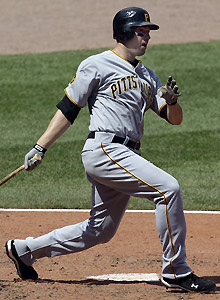
Friday, April 8, 2011

Boston a una victoria de 9-6 sobre los Yanquis de Nueva York

Prensa asociada
BOSTON--Los medias rojas terminó su peor racha para iniciar una temporada desde la segunda guerra mundial como Dustin Pedroia homered y manejó en tres carreras a levantar a Boston a una victoria de 9-6 sobre los Yanquis de Nueva York en el abridor de casa número 100 en el Fenway Park el viernes.
Con un lleno vítores de las introducciones de jugador de calentamiento, los Red Sox golpeó 12 hits, tres por Pedroia. Comenzaron la temporada en la carretera por ir 0-6 por primera vez desde el inicio de la temporada de 1945 a 0-8.
Más información sobre los medias rojos
Edes Gordon y el resto del equipo ESPNBoston.com tienen los Red Sox cubiertos. Blog
Habían sido una elección popular de pretemporada para llegar a la serie mundial después de agregar Carl Crawford y Adrian Gonzalez para apoyar lo que parecía una rotación fuerte. Pero las luchas de los entrantes continuaron cuando John Lackey (1-1) dio seis carreras en cinco entradas.
Todavía obtuvo la victoria cuando Jarrod Saltalamacchia ejecución puntuación doble rompió un empate 6-6 en la quinta.
Jonathan Papelbon, saliendo de su peor temporada, obtuvo el guardar con una perfecta novena entrada como Boston ganó su séptima apertura directamente de la casa.
J.D. Drew le había dado un cojín de tres carreras con un sencillo de dos carreras en la séptima.
El juego empezado mal para los Red Sox como Lacayo caminó al primer bateador, Brett Gardner, quien robó segunda. Después de un paseo a Alex Rodríguez, Robinson Cano llevó a un doble de dos carreras a campo profundo del centro.
Boston también mostró algunos pop temprano como Pedroia éxito su primera homer en el primero, un solo disparo dentro del Polo de izquierda-campo mal.
Los Yankees siguió adelante 3-1 en el segundo en dobles por Curtis Granderson y Gardner antes de que los medias rojas anotaron cinco carreras en la parte inferior de la entrada. No había más de cinco años en un juego anotaron en cualquiera de sus seis primeras pérdidas.
Más información sobre los Yankees
¿Desea obtener la primicia sobre todo en tiras? ESPNNewYork.com se le cubiertos. Blog
Las carreras salió de Phil Hughes, que se han negociado para su segunda salida recta y duró sólo dos entradas.
Boston cargó las bases en el segundo singles por Drew, Saltalamacchia y Jacoby Ellsbury y anotó cuando Marco Scutaro se basa en una forceout en la tercera. Luego Pedroia impulsó dos carreras con un sencillo y Adrian Gonzalez y David Ortiz mencionó en una carrera cada uno para una ventaja de 6-3.
Lacayo mantuvo luchando, renunciar un RBI doble a Cano en la tercera, un sencillo anotando ejecutar a Derek Jeter en la cuarta y un homer Rodríguez, su tercera de la temporada, en la quinta.
Que empatado el juego en 6, pero Boston siguió adelante en la parte baja de la quinta contra Bartolo Colón (0-1) en un doble por Saltalamacchia que anotó Kevin Youkilis, quien había señalado su tercer paseo.
Los medias rojas ganó a pesar de otra actuación terrible por Lacayo.
En su primera salida, permitió nueve carreras y 10 hits en 3 2/3 entradas de una pérdida de 12-5 a Texas. Hasta ahora esta temporada, ha permitido carreras en ocho de las nueve entradas en las que ha aparecido con 13 de los 17 hits que ha permitido ir para extra bases.
Notas de juegos
Cuando se le pregunte antes de iniciar el juego sobre Boston 0-6, Administrador de los Yankees Joe Girardi señaló fue con los Yankees de 1998 que abrieron 1-4 y pasó a un récord de 114-48 en la temporada regular y un título de serie mundial. ... Homero Rodriguez fue su 616th y le dio 1,836 carreras impulsadas, pasando de Rafael Palmeiro y empatando Ken Griffey Jr. 13o lugar. ... Carl Yastrzemski, quien hizo su debut en grandes ligas 50 años en una Red Sox uniforme y salió para el Salón de la fama, lanzó el primer lanzamiento ceremonial. ... Un calentamiento minuto de silencio fue observado por Lou Gorman, gerente general Boston desde 1984 a 1993 que murió el 1 de abril a la edad de 82. ... Se celebró otro minuto de silencio en honor de las víctimas del terremoto y tsunami en Japón.
Derechos de autor por STATS LLC y la prensa asociada

Red Sox Win Home Opener

http://bleacherreport.com/tb/b8RAcASSOCIATED PRESS
BOSTON -- The Red Sox ended their worst losing streak to start a season since World War II as Dustin Pedroia homered and drove in three runs to lift Boston to a 9-6 win over the New York Yankees in the 100th home opener at Fenway Park on Friday.

With a full house cheering from the pregame player introductions, the Red Sox pounded 12 hits, three by Pedroia. They started the season on the road by going 0-6 for the first time since beginning the 1945 season at 0-8.


They had been a popular preseason choice to reach the World Series after adding Carl Crawford and Adrian Gonzalez to support what seemed like a strong rotation. But the struggles of the starters continued when John Lackey (1-1) gave up six runs in five innings.

He still got the win when Jarrod Saltalamacchia's run-scoring double broke a 6-6 tie in the fifth.

Jonathan Papelbon, coming off his worst season, got the save with a perfect ninth inning as Boston won its seventh straight home opener.

J.D. Drew had given him a three-run cushion with a two-run single in the seventh.

The game started poorly for the Red Sox as Lackey walked the first batter, Brett Gardner, who stole second. After a walk to Alex Rodriguez, Robinson Cano drove a two-run double to deep center field.

Boston also showed some pop early as Pedroia hit his first homer in the first, a solo shot just inside the left-field foul pole.

The Yankees went ahead 3-1 in the second on doubles by Curtis Granderson and Gardner before the Red Sox scored five runs in the bottom of the inning. They hadn't scored more than five in a game in any of their first six losses.


The runs came off Phil Hughes, who was hammered for his second straight outing and lasted just two innings.

Boston loaded the bases in the second on singles by Drew, Saltalamacchia and Jacoby Ellsbury and scored when Marco Scutaro grounded into a forceout at third. Then Pedroia drove in two runs with a single and Adrian Gonzalez and David Ortiz singled in a run apiece for a 6-3 lead.

Lackey kept struggling, giving up an RBI double to Cano in the third, a run-scoring single to Derek Jeter in the fourth and a homer to Rodriguez, his third of the season, in the fifth.

That tied the game at 6, but Boston went ahead in the bottom of the fifth against Bartolo Colon (0-1) on a double by Saltalamacchia that scored Kevin Youkilis, who had drawn his third walk.

The Red Sox won despite another terrible performance by Lackey.

In his first start, he allowed nine runs and 10 hits in 3 2/3 innings of a 12-5 loss at Texas. So far this season, he has allowed runs in eight of the nine innings in which he's appeared with 13 of the 17 hits he's allowed going for extra bases.

Game notesWhen asked before the game about Boston's 0-6 start, Yankees manager Joe Girardi noted he was with the 1998 Yankees who opened 1-4 and went on to a 114-48 record in the regular season and a World Series title. ... Rodriguez's homer was his 616th and gave him 1,836 RBIs, passing Rafael Palmeiro and tying Ken Griffey Jr. for 13th place. ... Carl Yastrzemski, who made his major league debut 50 years ago in a Red Sox uniform and went on to the Hall of Fame, threw out the ceremonial first pitch. ... A pregame moment of silence was observed for Lou Gorman, Boston's general manager from 1984 to 1993 who died on April 1 at the age of 82. ... Another moment of silence was held in honor of victims of the earthquake and tsunami in Japan.


Copyright by STATS LLC and The Associated Press

Manny Ramirez Retires

http://bleacherreport.com/tb/b8RAc

Opening Day at Fenway

April 8, 2011 || View as webpage » | Visit redsox.com » | E-mail Forward this e-mail
Like on Facebook Tweet
Opening Day at Fenway Park, april 4, 2010, 5:02 a.m. ET

There is simply no better day than
Opening Day at Fenway.

Boston Red Sox Welcome home.
Welcome to 2011.
© 2011 MLB Advanced Media, L.P. All Major League Baseball trademarks, service marks and copyrights used herein are the property of the applicable MLB entity. All rights reserved. Any other marks used herein are trademarks of their respective owners.

Please review our Privacy Policy »

You received this message because you registered to receive commercial e-mail messages from redsox.com.

If you no longer wish to receive commercial e-mail messages from redsox.com, please unsubscribe »

Postal Address: redsox.com, c/o MLB Advanced Media, L.P., 75 Ninth Avenue, 5th Floor, New York, NY 10011.

Thursday, April 7, 2011

Pelotas de béisbol Juiced son una herida estrechamente mito

 
Pelotas de béisbol Juiced son una herida estrechamente mito


Por Jeff Passan, Yahoo! Sports15 horas, 12 minutos hace


tweet28
Correo electrónico
Imprimir


La bola juiced es versión del béisbol del monstruo del lago Ness, una criatura tan fantástica que uno quiere creer que es real. Como Nessie, no hay ninguna forma de demostrar la existencia de Juicy – el béisbol mágico que ordena las grandes ligas de béisbol herida extra-tight para promover más cuadrangulares, así que tenemos que esperar a un teórico de la conspiración salir de los bosques cada pocos años y afirman que es volver.

Después el frenesí de jonrón en la apertura de béisbol izquierdo de fin de semana buscando respuestas – porque la verdad, la fluctuación de pequeño tamaño, no exactamente satisface apetitos mayoría – llegó nuestro Salvador, un receptor de emporcado sin nombre, quien dijo que el Atlanta Journal-Constitution de Dave O'Brien que bolas sentir más difíciles este año y, cree, que no es un accidente.


Más de Jeff Passan

10 Grados: fortunas salvajemente fluctúan principios el 4 de abril de 2011
Cubbie camuflaje no puede disimular la decepción el 1 de abril de 2011


Un grand slam por Neil Walker los piratas fue uno de una serie de explosiones como comenzó la temporada.
# Asociados prensa #

La economía es mala, fue de pensamiento del receptor y cuadrangulares unidad emoción. Por lo que por supuesto el siguiente paso lógico es crimen organizado. A fin de bolas de jugo, MLB tendría la cooperación entre los fabricantes de corcho en Mississippi, las spinners de hilados en Vermont y las alcantarillas de ocultar en Costa Rica, además de aquellos que probar las bolas en St. Louis y las finales capas de control de calidad, los asistentes de la casa club que les frotan con barro y los árbitros que mantienen un año en un momento.

Tal vez, todavía, el receptor fue a algo. Seguramente no todos de béisbol podrían ser en la conspiración, sobre todo los hombres podría avergonzar más, los lanzadores que cringe a renunciar a cualquier cuadrangulares. ¿Una pregunta simple podría resolver el misterio: es la bola que lanzó el primer fin de semana diferente de cualquier manera?

"Bola misma", dijo arranque Royals Jeff Francis # notas #, que ha dado tres cuadrangulares.

"Nada diferente," dijo arranque Royals Bruce Chen # notas #, víctima de tres así.

"No dar hasta cualquier cuadrangulares," arranque de White Sox Mark Buehrle # notas #, dijo. ". Bolas están bastante bien conmigo".

"Dio uno," dijo su compañero de equipo, John Danks # notas #. "Pero no fue el balón".

Cuatro lanzadores. Misma respuesta. Sin bola juiced. MLB incluso emitió una declaración confirmando tanto.

Maldito.

Hubiera sido divertido ir a través de la torpeza de 2000 todo de nuevo, cuando por lo que muchas personas dentro de béisbol estaban convencidas de que la MLB fue licuación la bola, la Liga realmente encargó un estudio comparando la pelota de ese año con los del año anterior. Los resultados fueron sorprendentes: las bolas eran los mismos! Mismo peso. Circunferencia de la misma. Diferencia insignificante en cuanto volaron. Un laboratorio en Massachusetts había disparado les de cañones, literalmente, a encontrar cierta distinción. No pudo.

Otra cosa fue juiced, por supuesto, y es curioso mirar hacia atrás en la ingenuidad de hace una década. La idea de 2,34 jonrones por partido aún boggles la mente – particularmente considerando a través de juegos primero 46 de la temporada, cuando el tumulto de jonrón fue alcanzando proporciones Brobdingnagian, hubo 2,35 por partido.

Porque llegaron racimos: Texas 11 visitas fuera de Boston y la serie de Los Angeles Angels-Kansas City aparece más 15 cuatro juegos: las antenas aumentaron y asignan una pregunta: por qué!, en letras mayúsculas y con un signo de exclamación, dado que tanto béisbol en con una explicación.

Este incremento ocurrido en, digamos, agosto, cuando el clima es más cálido y la pelota vuela más lejos, nadie habría pensado algo. Porque el año pasado fue el año supuesto de la lanzadora, aunque, y porque es fácil pasar por alto las cosas como el tamaño del estadio de Texas [pequeño] y el viento en el Kauffman Stadium durante el fin de semana [grande] y porque, seamos sinceros, que todos disfrutamos de un zumbido buena por helicópteros negros, la bola juiced, bendiga su corazón dulce, regresó para uno de sus pequeños hurrahs.

"Personas buscar una explicación cuando suceden cosas graciosas", dijo Francis. "La cosa es, jugamos este juego tanto, cosas graciosas están obligadas a pasar".

Pocos entienden el potencial de una pelota de béisbol cargado como Francis. Pasó los primeros seis años de su carrera en Colorado, donde los Rockies en 2002 comenzaron a almacenar pelotas de juego utilizado en un humidor. Durante casi una década, se habían quejado lanzadores que las bolas fueron demasiado duro, demasiado fácil, demasiado difícil de agarre. El humidor mitiga esas cuestiones y números ofensivos han disminuido desde entonces. En comparación con las bolas aún se usa en la práctica de bateo de Rockies, Francis dijo, los coloca en el humidor sentirse mucho más cercanas a los estadios a baja altura.

No disuadir a la paranoia. El otoño pasado, en medio de una carrera de banderín, arranque de San Francisco Giants Tim Lincecum # notas # había capturado un balón a un árbitro y comenzó a violín con ella. Él hilarlo en su mano derecha un par de veces antes de lanzamiento ba

Juiced baseballs are a tightly wound myth

http://sports.yahoo.com/mlb/news?slug=jp-passan_juiced_baseballs_myth_040611


Juiced baseballs are a tightly wound myth


The juiced ball is baseball’s version of the Loch Ness Monster, a creature so fantastical that you want to believe it’s real. Like Nessie, there is no way to prove the existence of Juicy – the magical baseball that Major League Baseball orders wound extra-tight to promote more home runs – so we have to wait for a conspiracy theorist to emerge from the woods every few years and claim it’s back.
After the home run frenzy opening weekend left baseball looking for answers – because the truth, small-sample-size fluctuation, doesn’t exactly satisfy most appetites – there came our savior, an unnamed bullpen catcher, who told the Atlanta Journal-Constitution’s Dave O’Brien that balls feel harder this year and, he believes, that’s not an accident.
A grand slam by the Pirates' Neil Walker was one of a slew of blasts as the season began.
(Associated Press)
The economy is bad, the catcher’s thinking went, and home runs drive excitement. So of course the next logical step is racketeering. In order to juice balls, MLB would need cooperation among the cork makers in Mississippi, the yarn spinners in Vermont and the hide sewers in Costa Rica, plus those who test the balls in St. Louis, and the final layers of quality control, the clubhouse attendants who rub them with mud and the umpires who keep a bagful at a time.
Perhaps, still, the catcher was on to something. Surely not all of baseball could be in on the conspiracy, least of all the men it would embarrass most, the pitchers who cringe at giving up any home runs. One simple question could solve the mystery: Is the ball you threw the first weekend different in any way?
“Same ball,” said Royals starter Jeff Francis(notes), who has yielded three homers.
“Nothing different,” said Royals starter Bruce Chen(notes), victim of three as well.
“I didn’t give up any homers,” White Sox starter Mark Buehrle(notes) said. “Nope. Balls are pretty fine with me.”
“I gave one up,” said his teammate, John Danks(notes). “But it wasn’t the ball.”
Four pitchers. Same answer. No juiced ball. MLB even issued a statement confirming as much.
Damn.
It would’ve been fun to go through the silliness of 2000 all over again, when so many people inside baseball were convinced that MLB was juicing the ball, the league actually commissioned a study comparing that year’s ball with those from the year before. The results were stunning: The balls were the same! Same weight. Same circumference. Negligible difference in how far they flew. A lab in Massachusetts had fired them out of cannons, literally, to find some distinction. It couldn’t.
Something else was juiced, of course, and it’s funny to look back at the naïveté of just a decade ago. The idea of 2.34 home runs per game still boggles the mind – particularly considering through this season’s first 46 games, when the home run tumult was reaching Brobdingnagian proportions, there were 2.35 per game.
Because they came in bunches – Texas hit 11 off Boston and the Los Angeles Angels-Kansas City series featured 15 over four games – the antennae rose and assigned a question: WHY!, in capital letters and with an exclamation point, since so much in baseball does come with an explanation.
Had this surge happened in, say, August, when the weather is warmer and the ball flies farther, nobody would’ve thought a thing. Because last year was the supposed Year of the Pitcher, though, and because it’s easy to ignore things like the size of Texas’ ballpark [small] and the wind at Kauffman Stadium over the weekend [big], and because, let’s be honest, we all enjoy a good buzzing by black helicopters, the juiced ball, bless its sweet heart, returned for one of its small hurrahs.
“People search for an explanation when funny things happen,” Francis said. “The thing is, we play this game so much, funny things are bound to happen.”
Few understand the potential of a loaded baseball like Francis. He spent the first six years of his career in Colorado, where the Rockies in 2002 started storing game-used balls in a humidor. For nearly a decade, pitchers had complained the balls were too hard, too slick, too difficult to grip. The humidor mitigated those issues, and offensive numbers have dropped since then. Compared to the balls still used in Rockies batting practice, Francis said, those placed in the humidor feel significantly closer to ones in stadiums at lower altitudes.
It doesn’t deter the paranoia. Last fall, in the middle of a pennant race, San Francisco Giants starter Tim Lincecum(notes) caught a ball from an umpire and started to fiddle with it. He spun it in his right hand a few times before tossing it back to the ump. A TV camera caught him mouthing a reaction with a perplexed look on his face: “Truckin’ juiced ball bullspit.” Or something like that.
Lincecum beat the Rockies that night, prompting shortstop Troy Tulowitzki(notes) to tell him: “Good game. We couldn’t even get you with our juiced balls.”
The ball may or may not have gone in the humidor. It may or may not have been juiced. Like Lincecum said, “If it’s happening or not, it doesn’t really matter.” The legend of the juiced ball lives on, even if an increasing sample has brought us closer to reality.
On Monday, there were 11 home runs in six games, and on Tuesday, 17 in 14, for a total of 136 in 66 games. That brought the home run rate back to 2.06 per game – much closer to the 1.90 in the Year of the Pitcher than the 2.35 in the Year of the Steroid.
“If I give up a couple home runs my next start, come back to me then,” Buehrle said. “I bet the balls will be juiced.”
Jeff Passan is a national writer for Yahoo! Sports. He is the co-author of the new book "Death to the BCS: The Definitive Case Against the Bowl Championship Series." Follow him on Twitter. Send Jeff a question or comment for potential use in a future column or webcast.
Updated 15 hours, 9 minutes ago

Manny Booed At Home

http://bleacherreport.com/tb/b8QTs


Big League Stew - MLB


Fans of the Tampa Bay Rays may not be long in number, but they're very short on patience.
That much was clear during Tuesday's 5-3 loss to the Los Angeles Angels as Manny Ramirez(notes) was booed after going 0 for 4 with three strikeouts.
The Rays are now 0-4 to start the season — we've already detailed what that has meant historically — and the team's top two offseason acquisitions have been at the forefront of the struggling.
Ramirez has gone 1 for 16 with four strikeouts while teammate Johnny Damon(notes) has started 1 for 11. But if bearing the brunt of the boos from Tuesday's puny crowd bothered Man-Ram, he wasn't letting on.
In fact, his reaction was much different from that of manager Joe Maddon and teammate B.J. Upton(notes), who called the booing "very unfair" and "unbelievable."
From The Heater:
"It's not my first time I strike out three times," Ramirez said. "It's all good. I liked it."
When asked if he understood where the fans were coming from, Ramirez said, "That's everywhere. It's all right. I'm not mad at myself. I just got myself out."
Perhaps Manny's "I liked it" remark is an indication he'll use the reception as motivation from this point forward. And he completely has the right perspective in saying that "it's still early."
He'll have to wait a little bit before turning things around, though. Maddon has scratched him from the lineup for Wednesday's matinee against the Halos.